
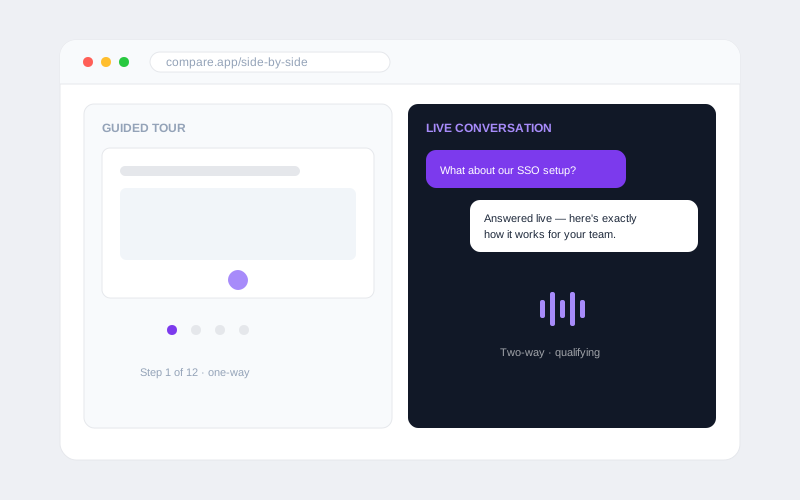
The interactive product demo was a real upgrade. Instead of a talking-head video or a locked "Book a Demo" button, buyers got clickable tours of the actual product — explore at your own pace, no sales call required. An entire category grew around it: Storylane, Walnut, Navattic, and a dozen others.
But the category has a ceiling, and most teams hit it within a quarter of shipping their first tour. The tour shows; it doesn't listen. This piece maps exactly where interactive demos stop and where a live conversation takes over — or you can book a demo and feel the difference directly.
What interactive product demos do well
Credit where due. A good click-through tour:
- Ungates the product — buyers see real screens without surrendering an email or waiting for a call
- Works asynchronously — embed it on a landing page, drop it in an email, leave it behind after a call
- Produces engagement data — which screens got attention, where viewers dropped off
- Scales infinitely — one build, unlimited views
If your funnel's biggest problem is that nobody can see the product without a meeting, an interactive demo is a sensible first fix.
Where the ceiling is
It's a monologue with clicking
Every tour is a path someone on your team scripted in advance. The buyer's actual question — "how does this handle our SSO setup?", "what does pricing look like for nine seats?" — has no slot in the flow. They finish the tour with their real objection unanswered, and unanswered objections don't convert; they quietly disqualify you.
It can't run discovery
A tour learns nothing about the buyer. Click analytics tell you what they looked at, never why — no pain, no timeline, no budget, no authority. Which means the discovery call still has to happen, and your funnel still has the bottleneck the tour was supposed to remove. More on that in how to qualify demo requests automatically.
It ages like a screenshot
Tours are built from captured product screens. Ship a redesign, and someone re-captures and re-edits every affected step. The asset is always drifting out of date between maintenance passes.
What a live conversation changes
A conversational AI demo agent — like Sonesse — inverts the model. Instead of the buyer walking your script, the demo follows the buyer.
- Two-way from the first second. The buyer asks; the agent answers, by voice, trained on your docs and playbooks. Objections get handled in the moment they form.
- Discovery is built in. The agent asks about current setup, pain, and timeline the way a good rep would — and scores the buyer against your ICP in real time.
- It adapts per buyer. A technical evaluator and an economic buyer get different conversations from the same agent, automatically.
- It remembers. A returning visitor resumes where they left off instead of starting the tour again.
- Upkeep is document-shaped. Update the source material and the agent is current — no re-capturing screens.
The honest side-by-side
Choose an interactive demo when you need a lightweight, embeddable asset for top-of-page conversion and you're comfortable that qualification happens elsewhere. Choose a live conversation when the demo needs to do a job: answer real questions, qualify the buyer, and hand your team a warm, scored meeting instead of a click report.
Many teams run both — a tour on the pricing page for casual browsers, and a conversation behind the demo button for buyers ready to engage. If you're comparing specific vendors in the category, we've written direct, honest comparisons against Storylane, Walnut, and Navattic.
The cost structure is different, too
Interactive demos carry a hidden ongoing cost that rarely appears in the vendor comparison: the build-and-maintain cycle. Someone on your team — usually product marketing or a solutions engineer — owns capturing screens, scripting flows, personalising variants for key accounts, and redoing all of it when the UI ships changes. Multiply that across every use case you want a tour for, and the "one build, unlimited views" pitch starts to look more like a content treadmill.
A conversational agent's cost structure is flatter. There's one agent, not a library of tours, and its knowledge is maintained the same way you already maintain docs and playbooks. New use case? It's a conversation topic, not a new build. Product update? Update the source document. The maintenance burden tracks your documentation, which you were writing anyway — not your UI, which changes constantly.
A simple test
Open your current demo experience and ask it your buyers' most common objection out loud. If nothing happens, you have a brochure — a good one, maybe, but a brochure. The demo that wins the deal is the one that can answer back.
Ask yours anything — book a demo.