
There's a meeting missing from most B2B sales processes. It sits between "prospect clicks Book a Demo" and "AE runs the demo call" — and because it's missing, the demo call has to do two jobs at once: educate a stranger and qualify them. It does both badly. That missing meeting is the demo before the demo call, and it's the core of what pre-demo qualification should actually mean.
Impatient version: it's a live AI-run conversation that demos, answers, and scores every buyer before a human is involved — book a demo.
The demo call is doing two jobs
Watch a first sales call closely and you'll see the seams. The first twenty minutes are education: here's the product, here's how it works, here are answers to questions the buyer could have asked anyone. The last ten minutes are what the call was actually for: is this a fit, what's the timeline, who else needs to be involved, what happens next.
Your AE's skill only matters in those last ten minutes. The first twenty could be delivered by anyone — or anything — that knows the product well. Bundling them means your most expensive people spend most of every call doing the job that least needs them, with buyers who may not be qualified at all.
What pre-demo qualification usually means — and why it falls short
Most teams' version of pre-demo qualification is a form, a lead score, or an SDR screening call. All three share the same weakness: they qualify without showing the product. The buyer is asked to invest — fill this in, take this extra call — before receiving any value. High-intent buyers bounce off exactly this friction, which is why the fixes so often reduce qualified pipeline along with the noise. We've unpacked that trap in how to reduce unqualified demo requests.
The demo before the demo call flips the exchange. The buyer gets the product tour immediately — a real one, live, that answers their questions. Qualification happens inside that experience, not as a toll gate in front of it.
How the demo before the demo call works
A prospect clicks your demo link. Instead of a calendar picker, a live voice conversation starts — an AI agent trained on your product, your playbooks, and how your best reps handle objections. Over the next few minutes:
- The buyer gets a genuine demo — focused on their use case, because the agent asks and adapts
- Their questions get answered — integrations, security, pricing structure, the objections that would otherwise wait days for a human
- Discovery happens conversationally — current setup, pain, timeline, team size, captured as structured signal
- A score is produced — every conversation graded against your ICP, automatically
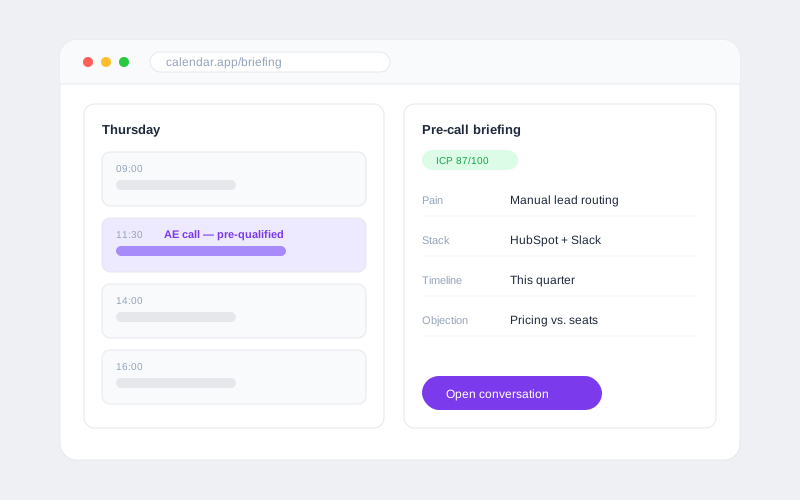
Qualified buyers book straight into an AE's calendar, and the AE walks in holding the full conversation summary. Unqualified visitors still leave educated and positive — they just never touched your team's time. That's how Sonesse works end to end.
What changes for the humans
The demo call stops being a first date. Your AE already knows the stack, the pain, and the timeline. The call starts at "let's talk about rollout" instead of "so, tell me about your team."
Win rates on human calls climb. Not because your reps got better overnight, but because they stopped meeting people who were never going to buy.
Coverage becomes total. The 2am visitor, the buyer in a time zone you don't staff, the Friday-evening researcher — every one of them gets the full experience the moment they raise a hand, with the same quality on the first conversation of the day and the thousandth.
And it compounds for returning buyers
One underrated property of the demo-before-the-demo-call: it has a memory. B2B evaluations aren't single sessions — a buyer visits, gets pulled into something, comes back a week later with two colleagues and new questions. A form doesn't remember them; a tour restarts from screen one. A conversational agent picks up where the last conversation ended: "Last time we talked about your Salesforce integration — did the security review question get resolved?" Each return visit deepens the qualification picture instead of resetting it, so the signal your AE eventually receives reflects the whole journey, not one snapshot.
The demo is the beginning now
For a decade, the demo was the climax of the sales process — the reward buyers earned by surviving your forms and your SDR screen. Buyers stopped accepting that trade, and the data shows it: they self-serve, they compare, and they resent gates. The teams winning now have made the demo the entry point — instant, conversational, and quietly doing the qualification work while the buyer just experiences a great first touch.
That's the demo before the demo call. Book a demo and put one in front of your funnel.