
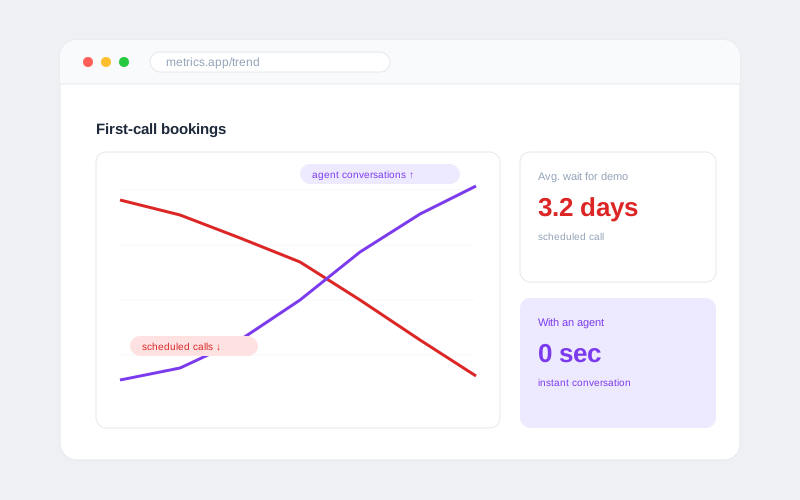
The first demo call used to be the front door of B2B software sales. Book a slot, meet a rep, watch the walkthrough, ask your questions. It made sense when the demo call was the only place a buyer could see the product and get answers. Neither of those things has been true for years — and the ritual is dying because buyers have stopped showing up for it, literally and figuratively.
This isn't an argument that sales calls are over. It's an argument that the first one — the scheduled, educational, discovery-plus-walkthrough call — is being replaced. (By what? Book a demo and find out.)
What's killing it
The latency is fatal
"Thanks for your interest — how's Thursday at 3?" was acceptable when every vendor moved at the same speed. Now the buyer who requests your demo on Monday spends the intervening days researching — and increasingly, being steered. G2's recent buyer research found that 69% of buyers ended up choosing a different vendor than they initially planned, guided by AI tools during evaluation. We've dug into that number in the buyer demo paradox. A calendar gap isn't neutral dead time anymore; it's when you lose.
The education already happened
By the time a serious buyer books a call, they've read your docs, watched your videos, compared you on review sites, and asked an AI assistant to summarise the differences. A rep opening with the standard walkthrough is re-teaching a syllabus the buyer finished last week — which is why so many first calls feel dead on arrival. The buyer came for the last ten minutes; they were made to sit through the first twenty.
The economics stopped working
An AE-led first call costs the same thirty-plus minutes whether the prospect is a budget-holding evaluator or a curious browser — and without real qualification beforehand, you can't tell which you booked. Teams tried to fix the economics with gates and SDR screens, which mostly filtered out impatient high-intent buyers. We've covered that failure mode in how to reduce unqualified demo requests.
What's replacing it
Not a video. Not a click-through tour. Those solve distribution, but the first call had a second function nothing one-way can replace: it answered this buyer's questions and captured this buyer's context. The replacement has to be conversational.
That's the shape of the emerging model: a live, voice-first AI agent as the funnel's front door. A prospect clicks and is instantly in a real conversation — the agent demos the product around their use case, answers their objections from your playbooks, runs discovery, and scores them against your ICP. Every visitor, every time zone, zero human minutes. Here's how Sonesse does it.
So what do AEs do all day?
The part of the job that was always the actual job. When the first touch is automated and qualifying, the human call moves later in the journey and changes character entirely:
- They open with context, not discovery. The conversation summary — stack, pain, timeline, objections raised — arrives before the meeting does.
- They meet fewer, better people. Only scored, ICP-cleared buyers reach a calendar. The demo-to-opportunity rate on human calls climbs accordingly.
- They do the work machines can't: multi-stakeholder navigation, commercial negotiation, building the internal business case with a champion.
The AE stops being the educator and becomes the closer — which is what you hired them for.
"But our product needs a human to demo it"
Every team believes this, and for a slice of every market it's true — genuinely bespoke enterprise deployments will always open with humans. But test the belief before you build your funnel on it. Pull the recordings of your last twenty first calls and tally how many minutes were genuinely unrepeatable: moments where the rep's judgment, not their product knowledge, changed the outcome. For most teams the honest number is small. The product knowledge, the standard walkthrough, the FAQ handling — all of it is trainable, because you've already trained humans on it using documents an agent can learn from too. Keep the humans for the calls where being human is the advantage.
The other version of this objection is emotional: the first call is "where we build the relationship." But a buyer who waited four days for a walkthrough they didn't need starts the relationship annoyed. A buyer whose questions were answered instantly at 11pm — then met a well-briefed AE — starts it impressed. Speed and competence are relationship-building now.
An honest obituary
The first demo call didn't die because sales teams got lazy or buyers got difficult. It died because it bundled three jobs — showing the product, answering questions, qualifying the buyer — that no longer need to be bundled, delivered at a speed buyers no longer accept. Unbundle them: let a conversation handle the first touch instantly, and spend your humans where humans win deals.
The front door is open — book a demo.